Official websites use .gov
A .gov website belongs to an official government organization in the United States.

Secure .gov websites use HTTPS
A lock (
) or https:// means you’ve safely connected to the .gov website. Share sensitive information only on official, secure websites.



Advanced communications
Secure, reliable, high-speed wireless communications are critical to the economic and national competitiveness of the United States. Advanced communications are enabling dramatic changes in how consumers, manufacturers, governments, and others provide and consume information, transact business, provide and use essential services, and shop, among other tasks. The insatiable societal demand for connectivity will require significant advancements in communication technologies.
NIST is currently the U.S. government’s leader in fundamental and applied research, standards and government-academia-industry coordination for advanced communications technologies.
Learn more about NIST’s work in advanced communications and NIST leadership in three spaces:
Explainers

NextG: 5G-and-Beyond Technology
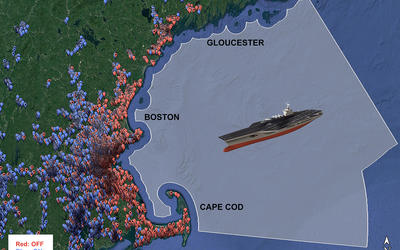
Spectrum sharing
Key Accomplishments
- Radio: NIST began operating radio stations more than 100 years ago, initially providing stable frequency signals to promote early development of the field and since then offering many other public benefits, including time signals to synchronize clocks and geophysical alerts for amateur (ham) radio users.
- Closed captioning: NIST invented TvTime, an Emmy-award-winning method for broadcasting time and frequency information, which evolved into closed captioning. The technology benefits the deaf and hard of hearing and created an industry of suppliers of closed captioning services.
- Antenna testing: NIST pioneered testing of high-performance antennas — crucial communications tools — for radar, aircraft and satellites. NIST's key contributions to the field included a cost-saving approach and software for computing an antenna's complex outdoor radiation pattern using data collected indoors.
News and Updates

Advancing Space Communications at NIST Communications Technology Laboratory
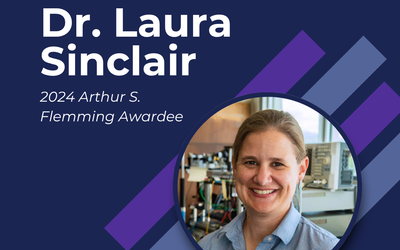
NIST CTL Scientist Honored with 2024 Arthur S. Flemming Award
Empowering Future Innovators: NIST CTL Connects Cybersecurity Students with Real-World Research
Blog Posts
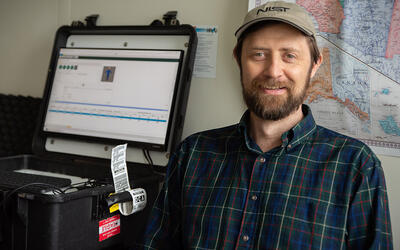
How Thousands of Tiny Dots Can Save First Responders’ Lives

Quantum and Dance: It Takes 2 to Entangle