
Biography
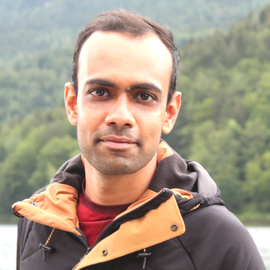
Saurabh Steixner-Kumar is a researcher at the systems neuroscience department at the university hospital (part of hamburg university) in Hamburg, Germany .
His research interests include data science, social decision making, bayesian statistics, reinforcement-learning, modeling, EEG hyperscanning.
(Webspace is in forever BETA)
Interests
- Data Science
- Decision making
- Bayesian statistics
- Reinforcement learning
- Modeling
- Electroencephalography hyperscanning
Education
-
Doctorate/PhD in Neuroscience, 2017
Max Planck Institute for Human Cognitive and Brain Sciences & Leipzig University
-
MSc Digital communications, 2014
Christian Albrechts University (Kiel University)
-
BTech Electronics and Communications, 2010
Ganpat University
Skills
Coding/Scripting
I use various coding and scripting languages at varying levels. I have experience in Unix-shell, MATLAB, R, STAN, LATEX, C/C++, CUDA, Python, HTML.
Algorithms/Techniques
Experienced in different statistical approaches and algorithms. Bayesian statistics, Reinforcement learning, Inference statistics, Modeling, Signal processing and various related approaches.
Practical applications
Skills using toolboxes such as fieldtrip, EEGLAB, Psychtoolbox. These help designing and implementing EEG/MEG, tDCS/tACS and different neurophsycological and behavioral experiments. Have previously used LABVIEW implementing virtual instruments.
Languages
I am comfortable in multiple languages. English: native. German: passive B2, active B2. Hindi: native. Gujarati: native.
Hobbies
Outside work; I like to engage in running, skiing, playing volleyball, tennis and painting
Experience
University Medical Center Hamburg-Ependorf
Max Planck Institute for Human Cognitive and Brain Sciences
University Medical Center Schleswig-Holstein.
EADS Eurocopters (Airbus Helicopter)
EADS Astrium Space Transportation (Airbus Space and Defence)
Project RUBY: Bubble formation is different in microgravity, demystifying it takes capturing multiply images of every moment in its creation. The project used various image processing tools and techniques to sort them and report the missing links.
Project FOAM: The need to study the formation of foam in micro gravity of space is essential in order to enhance the food structures. Therefore this project, part of the collaboration with ESA (European space agency) and the ISS (International space station) columbus module had to design a lab box for experimentation. The prototype involved testing hardware and software on a parabolic flight. The challenge was to create a software to operate in the extreme conditions. Different correlators, multiple cameras monitoring the experiment box and various motor components were controlled symultaneously.
The sucess story can be found at this link.
Featured Publications
Humans depart from optimal computational models of interactive decision-making during competition under partial information
Decision making under uncertainty in multiagent settings is of increasing interest in decision science. The degree to which human agents depart from computationally optimal solutions in socially interactive settings is generally unknown. Such understanding provides insight into how social contexts affect human interaction and the underlying contributions of Theory of Mind. In this paper, we adapt the well-known ‘Tiger Problem’ from artificial-agent research to human participants in solo and interactive settings. Compared to computationally optimal solutions, participants gathered less information before outcome-related decisions when competing than cooperating with others. These departures from optimality were not haphazard but showed evidence of improved performance through learning. Costly errors emerged under conditions of competition, yielding both lower rates of rewarding actions and accuracy in predicting others. Taken together, this work provides a novel approach and insights into studying human social interaction when shared information is partial.
Strategies for navigating a dynamic world
One of the most difficult problems for an adaptable agent is gauging how to behave in a nonstationary environment. When conditions are stable, an organism generally pursues a strategy known to provide the best outcome. However, when environmental conditions change, an organism abandons the current action plan and searches for a new best option. The most challenging aspect of this search—calculating the exact time point at which to change strategies—requires the brain to integrate past and present observations and evaluate whether they remain consistent with current environmental conditions. On page 1076 of this issue, Domenech et al. (1) report on the modeling of rare direct electrical recordings from the prefrontal cortices (PFCs) of a small group of human epilepsy patients as they flexibly negotiated a nonstationary environment.
Recent Publications
Humans depart from optimal computational models of interactive decision-making during competition under partial information
Humans depart from optimal computational models of socially interactive decision-making under partial information
Strategies for navigating a dynamic world
Theory of mind and decision science: Towards a typology of tasks and computational models
Modeling Cooperation and Competition in the Tiger Task
Press
Medial prefrontal cortex regions involved when the brain decides whether to continue a behavior
Space for dessert?
Online certifications
Python data science part 2 of 2 course
Python data science part 1 of 2 course
Python intermmediate course
Recent Posts
Projects
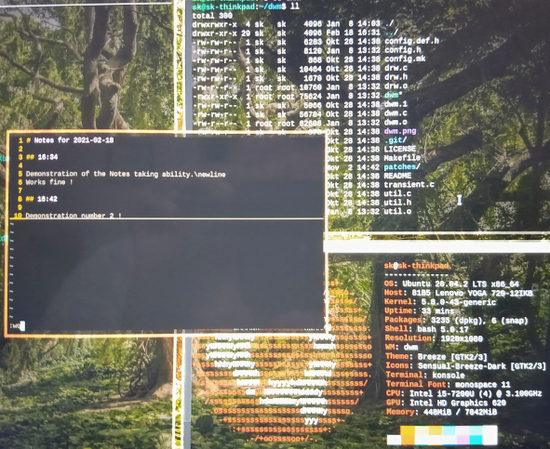
Notes_taking
A clever way of taking impromptu notes while working
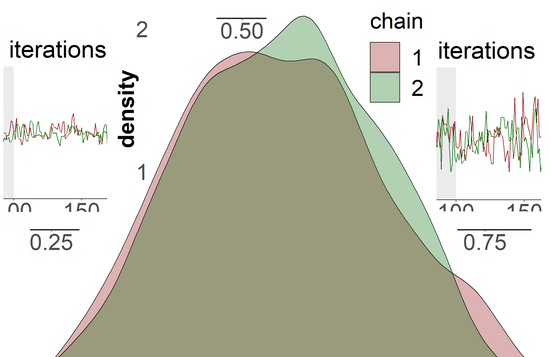
Bayesian_modeling
Exercises in R and Stan of the Bayesian Cognitive Modeling book by Lee and Wagenmakers