
Build and scale agentic apps where your data lives
Full-stack developer tools to ship, manage and govern applications on a unified platform.
Develop data and AI applications with speed and confidence
Databricks provides an integrated environment for building low-latency apps and agents directly on your enterprise data. Stay flexible with open standards and use your preferred frameworks.
Databricks Apps
Use the open frameworks and tools you already love to create secure, interactive UIs. Databricks Apps provides a managed serverless runtime with built-in auth and governance, eliminating the need for manual infra management or data movement.

Agent Bricks
Build, deploy and orchestrate AI agents that run on your enterprise data. Combine models, retrieval and tools in a unified environment, with agents grounded in your business logic. Ship them as Databricks Apps and persist memory and state in Lakebase.

Lakebase
Build apps on a serverless Postgres engine that lives inside your lakehouse. Eliminate data silos and ETL pipelines with instant branching for testing and agent experimentation. One storage layer for both apps and analytics means no more synchronization bugs.
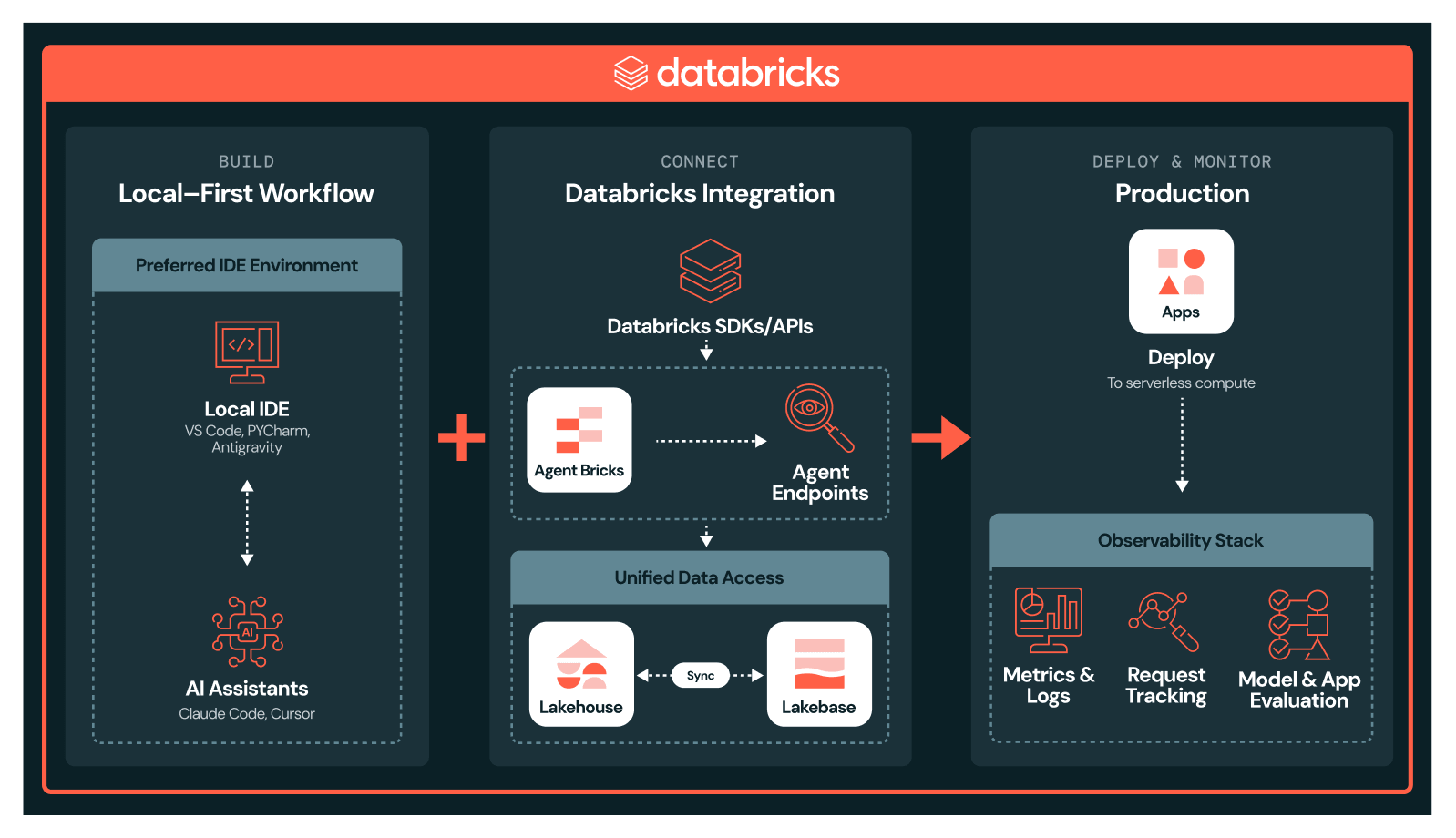
Compatible with the tools developers already know and love
Databricks fits into existing development workflows so teams can build with familiar tools while deploying on a governed enterprise platform.
Build with your preferred tools
Use IDEs, local workflows and Git-based development practices your team already knows. Local-first development and iteration and Git-based CI/CD practices supported.

Flexible model and framework ecosystem
Agent Bricks supports a broad range of leading foundation and open source models, including Claude, GPT, Gemini, DeepSeek and Llama.
Build enterprise applications to fit your business needs
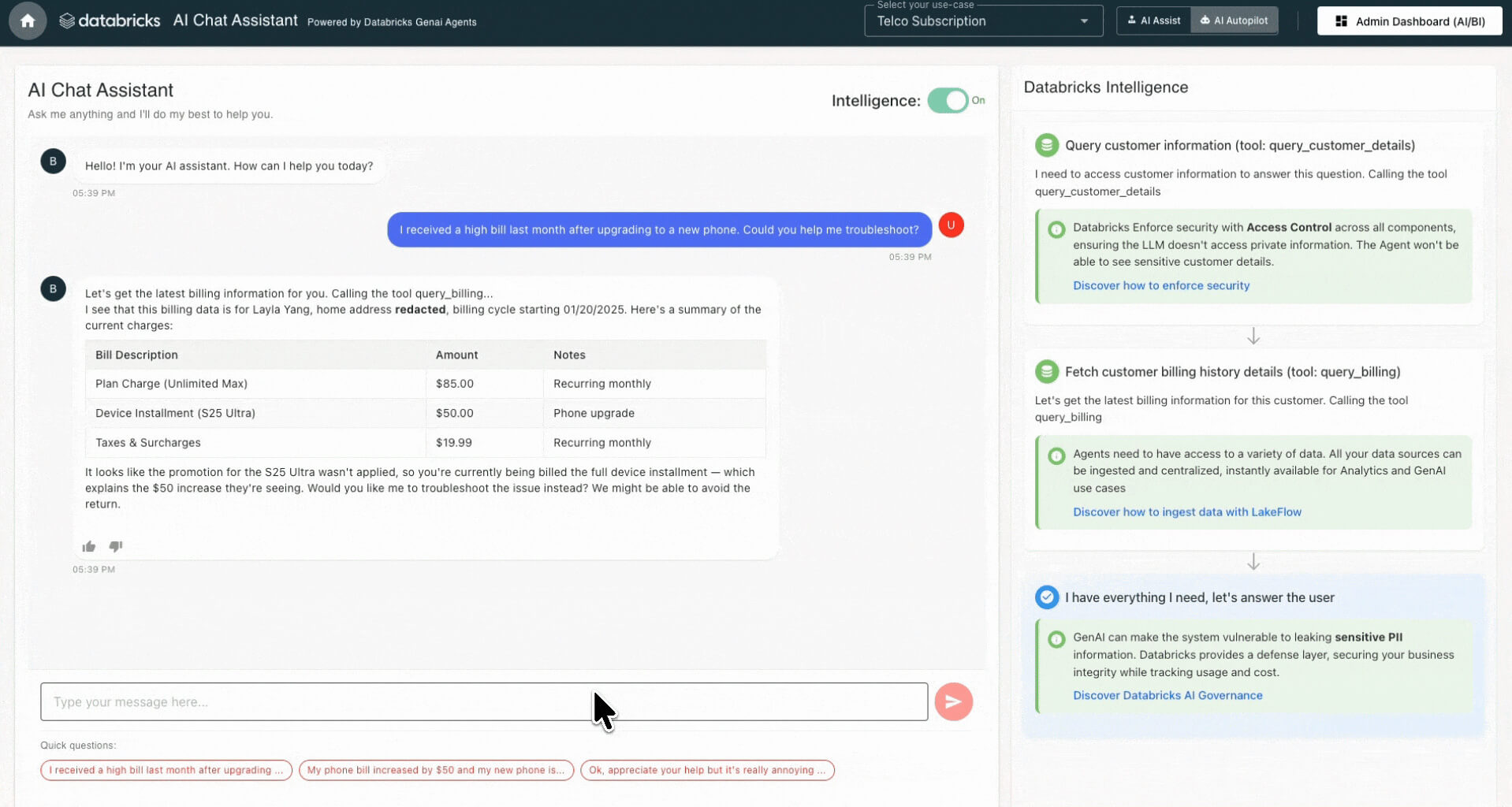
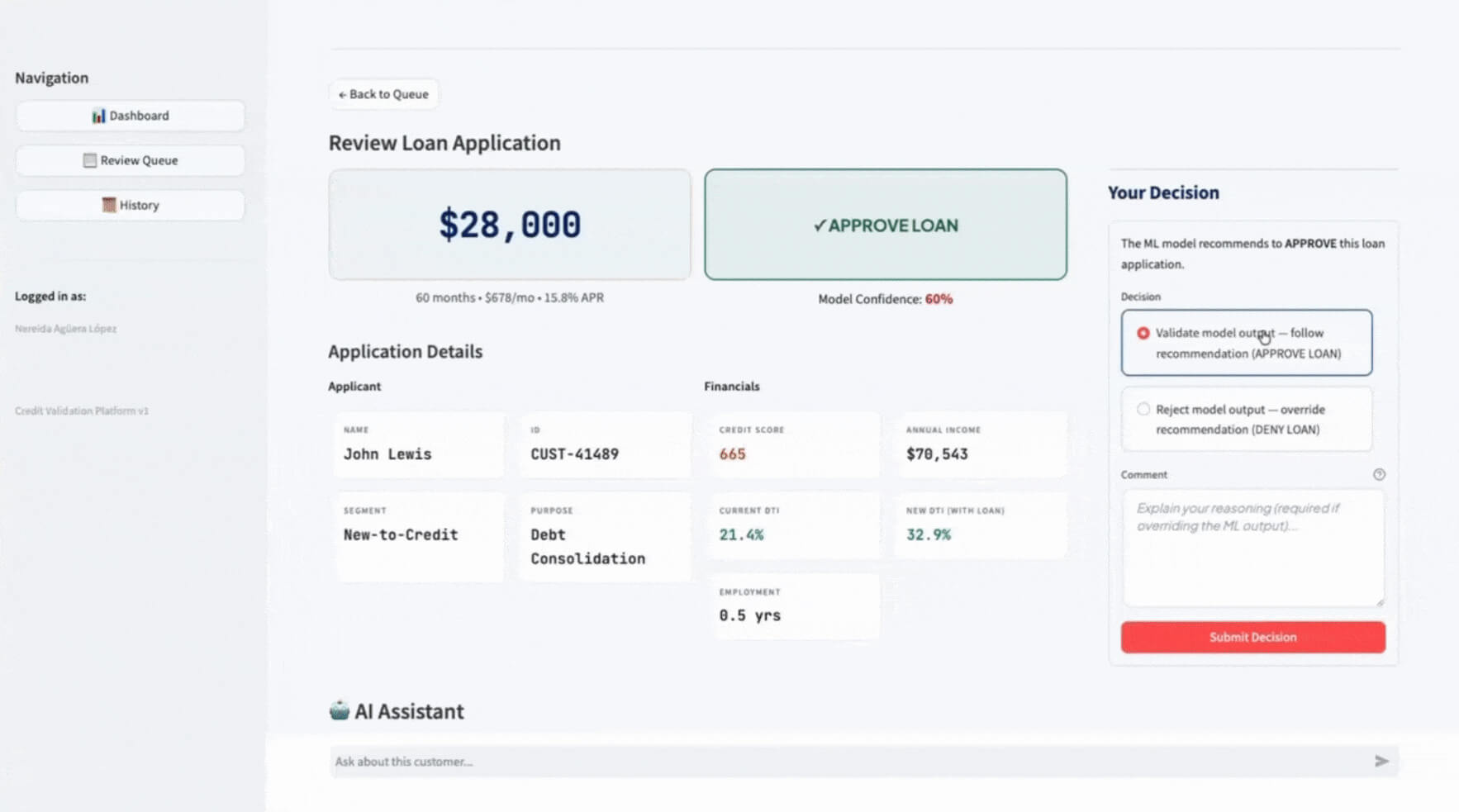
AI assistants and copilots
Deliver intelligent assistants powered by enterprise data for line-of-business users, analysts and customer-facing teams. Examples include:
- Internal knowledge assistants
- Customer support copilots
- Analyst productivity tools
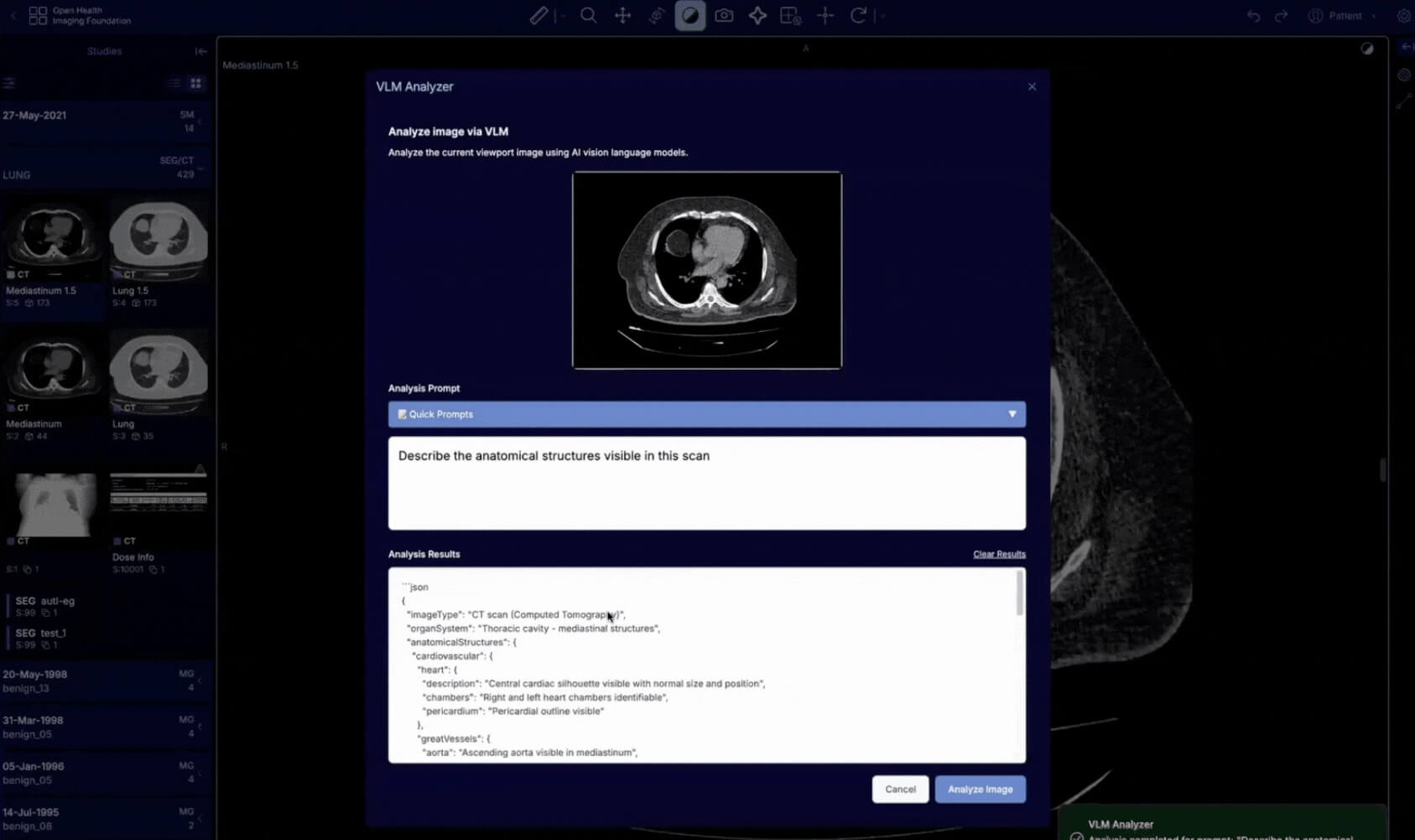
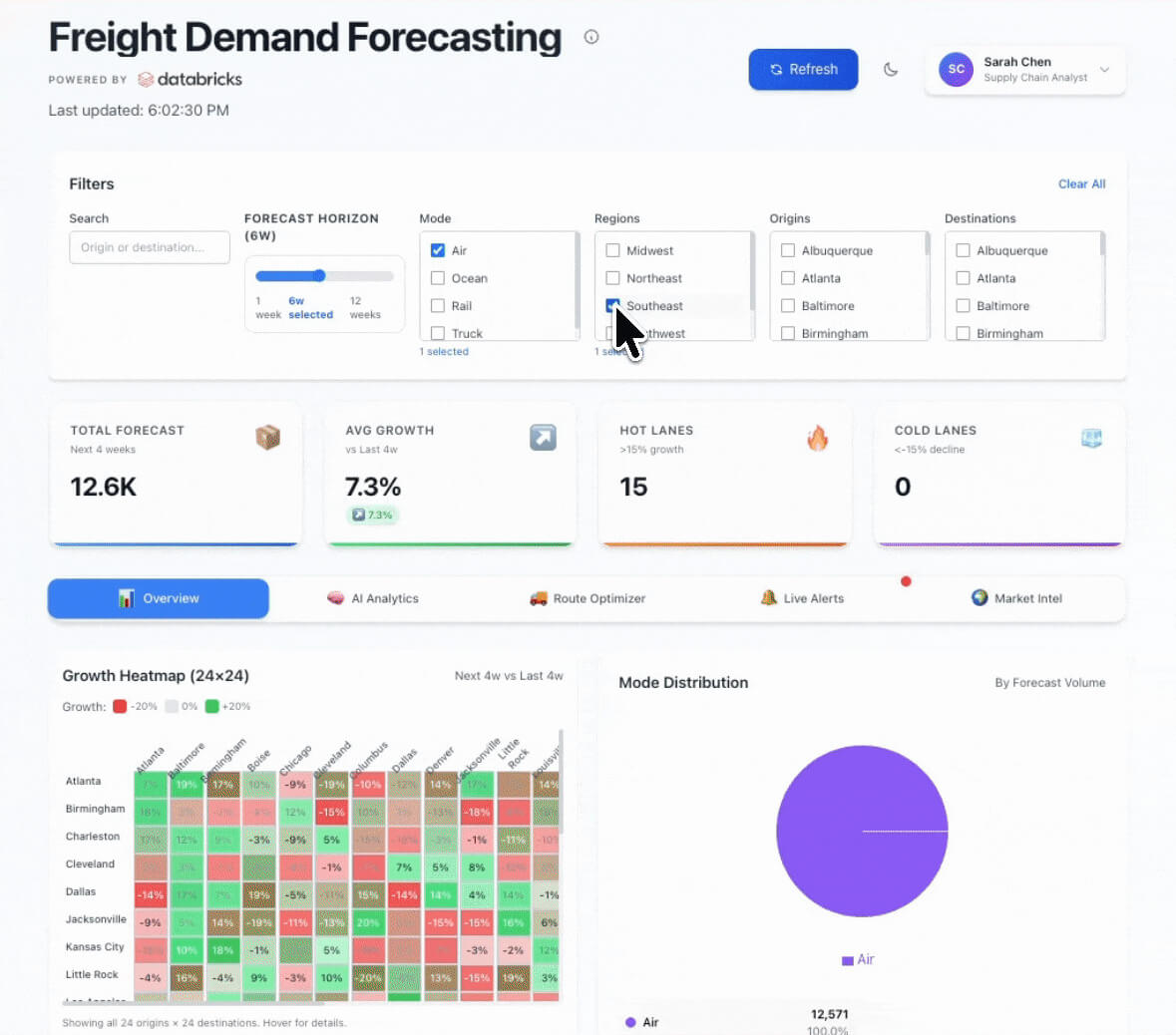
Upcoming events
Resources

FAQ
Start building on the Databricks Data + AI Platform today
Try Databricks with a free trial or get started for personal use – then deploy your agentic apps with governed data access, evaluation and production workflows