Bookmarks
RSS feed
Loading...
Hello, welcome to my digital garden 🌱
This space is a humble collection of things I've found interesting, useful, or worth revisiting. It's a mix of resources, tools, and insights that have helped me grow and stay curious. Whether it's a deep dive into a new technology or a small utility that makes life easier, everything here is something I've personally found value in. I hope you find something here that sparks your interest too.
Collections
🎧 Concentration10 bookmarks🔖 Good Reads40 bookmarks🧑🚒 Engineering13 bookmarks🦾 Artificial Intelligence41 bookmarks👓 UX & Frontend78 bookmarks🧈 Code Quality12 bookmarks🧪 Testing5 bookmarks📱 Mobile3 bookmarks💳 Online Payments & Billing6 bookmarks🔍 SEO Tools / Marketing5 bookmarks💹 Trading3 bookmarks🌼 Great Designs26 bookmarks💉 Security12 bookmarks
Loading...
🎧 Concentration10 bookmarks🔖 Good Reads40 bookmarks🧑🚒 Engineering13 bookmarks🦾 Artificial Intelligence41 bookmarks👓 UX & Frontend78 bookmarks🧈 Code Quality12 bookmarks🧪 Testing5 bookmarks📱 Mobile3 bookmarks💳 Online Payments & Billing6 bookmarks🔍 SEO Tools / Marketing5 bookmarks💹 Trading3 bookmarks🌼 Great Designs26 bookmarks💉 Security12 bookmarks
How Complex Systems Fail
how.complexsystems.fail
No Silver Bullet — Essence and Accident in Software Engineering
elvischidera.comGradual Disempowerment
gradual-disempowerment.ai
ChatGPT Is a Blurry JPEG of the Web
newyorker.comOpenAI’s chatbot offers paraphrases, whereas Google offers quotes. Which do we prefer?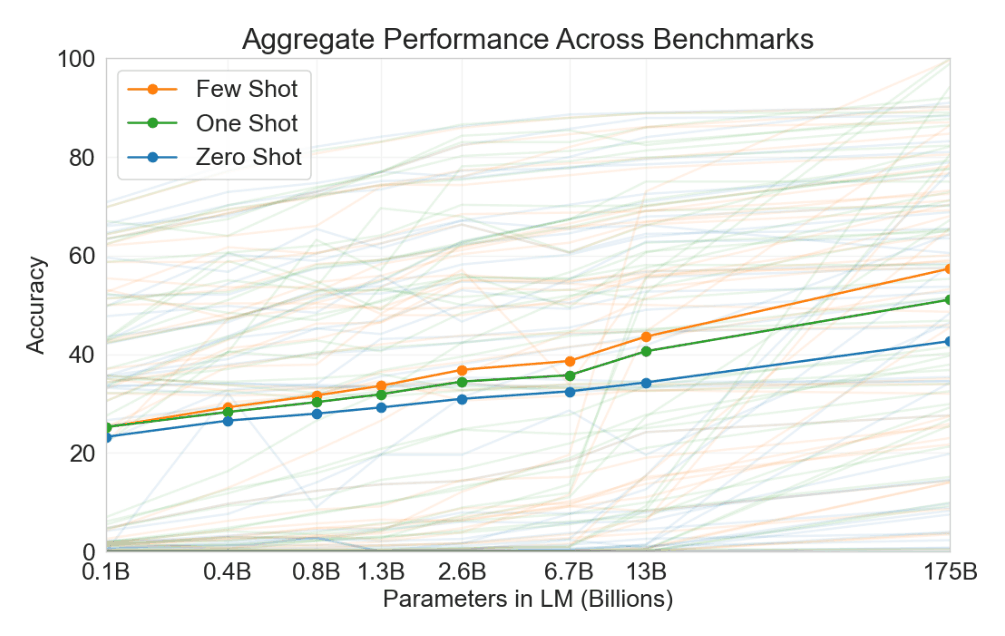
The Scaling Hypothesis
gwern.netOn GPT-3: meta-learning, scaling, implications, and deep theory. The scaling hypothesis: neural nets absorb data & compute, generalizing and becoming more Bayesian as problems get harder, manifesting new abilities even at trivial-by-global-standards-scale. The deep learning revolution has begun as foretold.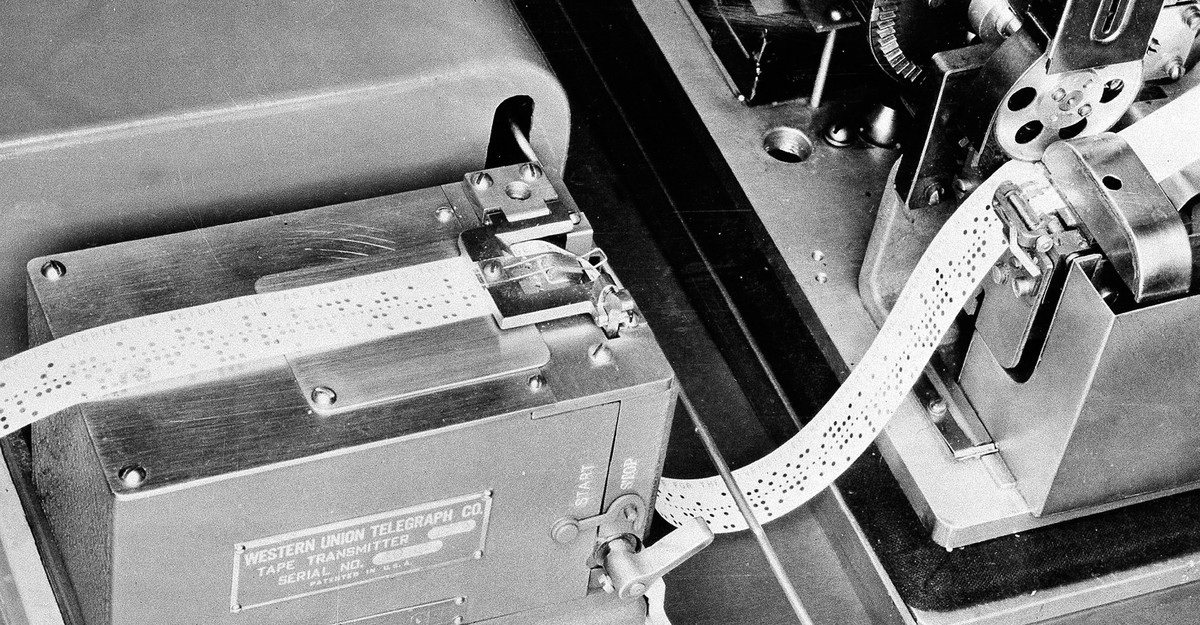
As We May Think
theatlantic.com“Consider a future device ... in which an individual stores all his books, records, and communications, and which is mechanized so that it may be consulted with exceeding speed and flexibility. It is an enlarged intimate supplement to his memory.”The Illustrated Transformer
jalammar.github.ioDiscussions: Hacker News (65 points, 4 comments), Reddit r/MachineLearning (29 points, 3 comments) Translations: Arabic, Chinese (Simplified) 1, Chinese (Simplified) 2, French 1, French 2, Italian, Japanese, Korean, Persian, Russian, Spanish 1, Spanish 2, Vietnamese Watch: MIT’s Deep Learning State of the Art lecture referencing this post Featured in courses at Stanford, Harvard, MIT, Princeton, CMU and others Update: This post has now become a book! Check out LLM-book.com which contains (Chapter 3) an updated and expanded version of this post speaking about the latest Transformer models and how they've evolved in the seven years since the original Transformer (like Multi-Query Attention and RoPE Positional embeddings). In the previous post, we looked at Attention – a ubiquitous method in modern deep learning models. Attention is a concept that helped improve the performance of neural machine translation applications. In this post, we will look at The Transformer – a model that uses attention to boost the speed with which these models can be trained. The Transformer outperforms the Google Neural Machine Translation model in specific tasks. The biggest benefit, however, comes from how The Transformer lends itself to parallelization. It is in fact Google Cloud’s recommendation to use The Transformer as a reference model to use their Cloud TPU offering. So let’s try to break the model apart and look at how it functions. The Transformer was proposed in the paper Attention is All You Need. A TensorFlow implementation of it is available as a part of the Tensor2Tensor package. Harvard’s NLP group created a guide annotating the paper with PyTorch implementation. In this post, we will attempt to oversimplify things a bit and introduce the concepts one by one to hopefully make it easier to understand to people without in-depth knowledge of the subject matter. 2025 Update: We’ve built a free short course that brings the contents of this post up-to-date with animations: A High-Level Look Let’s begin by looking at the model as a single black box. In a machine translation application, it would take a sentence in one language, and output its translation in another.endtoend.pdf
web.mit.edu
Dario Amodei — The Urgency of Interpretability
darioamodei.com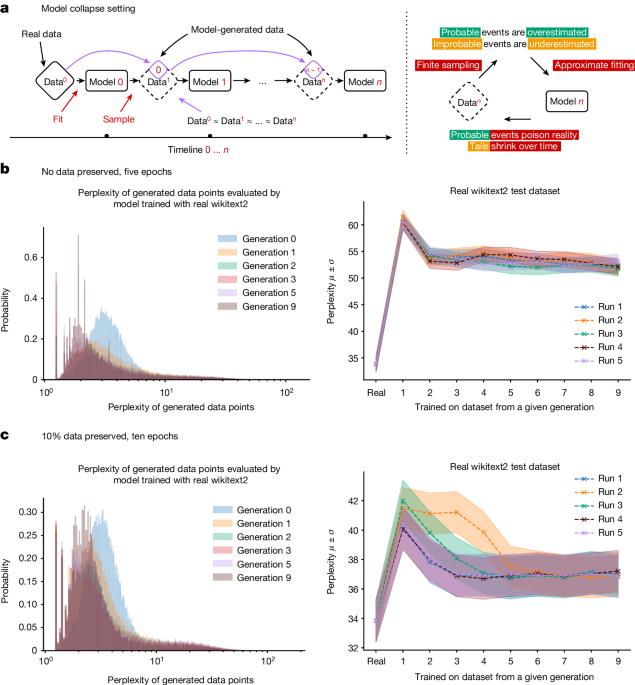
AI models collapse when trained on recursively generated data - Nature
nature.com Analysis shows that indiscriminately training generative artificial intelligence on real and generated content, usually done by scraping data from the Internet, can lead to a collapse in the ability of the models to generate diverse high-quality output.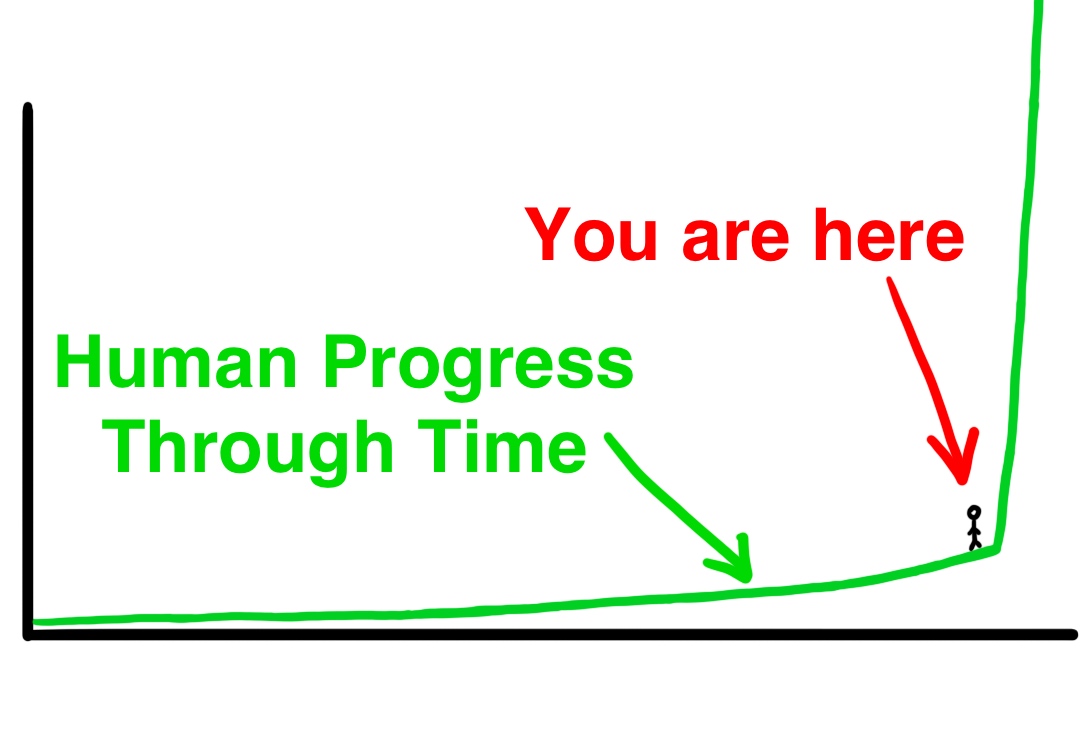
The AI Revolution: The Road to Superintelligence
waitbutwhy.comPart 1 of 2: "The Road to Superintelligence". Artificial Intelligence — the topic everyone in the world should be talking about.
On Chomsky and the Two Cultures of Statistical Learning
norvig.com
I.—COMPUTING MACHINERY AND INTELLIGENCE
academic.oup.comI propose to consider the question, ‘Can machines think?’ This should begin with definitions of the meaning of the terms ‘machine’ and ‘think’. The definit
Understanding LSTM Networks -- colah's blog
colah.github.ioReflections on Trusting Trust Ken Thompson
cl.cam.ac.uk
Home - Keep The Future Human
keepthefuturehuman.aiHumanity is on the brink of developing artificial general intelligence that exceeds our own. It's time to close the gates on AGI and superintelligence... before we lose control of our future.
AIs have a favorite number, and it's not 42
theregister.com: Ask a model to guess a number from 1 to 50 and it's likely to answer 27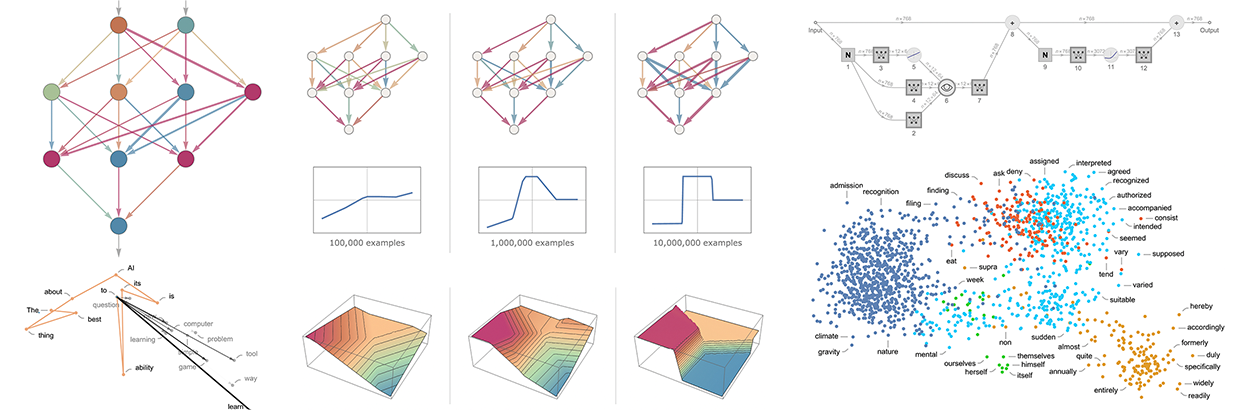
What Is ChatGPT Doing … and Why Does It Work?
writings.stephenwolfram.comStephen Wolfram explores the broader picture of what's going on inside ChatGPT and why it produces meaningful text. Discusses models, training neural nets, embeddings, tokens, transformers, language syntax.Man-Computer Symbiosis
groups.csail.mit.edu