
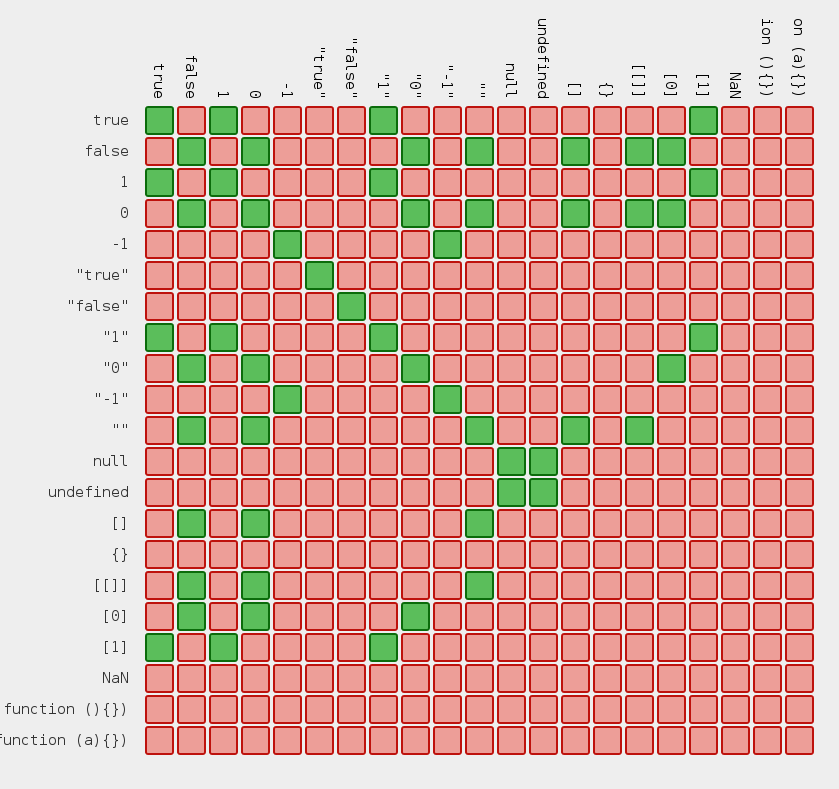
== (negated: !=)
When using two equals signs for JavaScript equality testing, some funky conversions take place.
=== (negated: !==)
When using three equals signs for JavaScript equality testing, everything is as is. Nothing gets converted before being evaluated.
A standard IF statement. If(value) {/*- green -*/} else { /*- red -*/ }
Note: This row does not match up with any of the rows in the other table.
< (negated: >=)
When using less than signs for JavaScript testing, some funky conversions take place.
<= (negated: >)
When using less than or equal to signs for JavaScript testing, some funky conversions take place.
> (negated: <=)
When using greater than signs for JavaScript testing, some funky conversions take place.
>= (negated: <)
When using greater than or equal to signs for JavaScript testing, some funky conversions take place.
a <= b && a >= b
When using greater than or equal to signs for JavaScript testing, some funky conversions take place.
!! (a ^ b)
When using greater than or equal to signs for JavaScript testing, some funky conversions take place.
Moral of the story:
Use three equals unless you fully understand the conversions that take place for two-equals.