Big outputs stay in files
A long log or test run is saved to a file. The model gets a short preview and reads only the lines it needs, instead of carrying the whole thing turn after turn.

Free and open source
Graff is a coding agent that keeps what the model reads small. Harness is the free desktop app that runs Graff, Claude Code, Codex and your other agents in one window.
Apple Silicon · macOS 12+ · Windows x64Other downloadsGitHub Getting started
4.1×
fewer tokens than Claude Code on tool-heavy tasks
2.2×
fewer tokens than Claude Code on coding tasks
3.3×
lower cost per task than the Codex app server
Same 21 tasks, three runs each, every run passed, same model on both sides. How we measured →
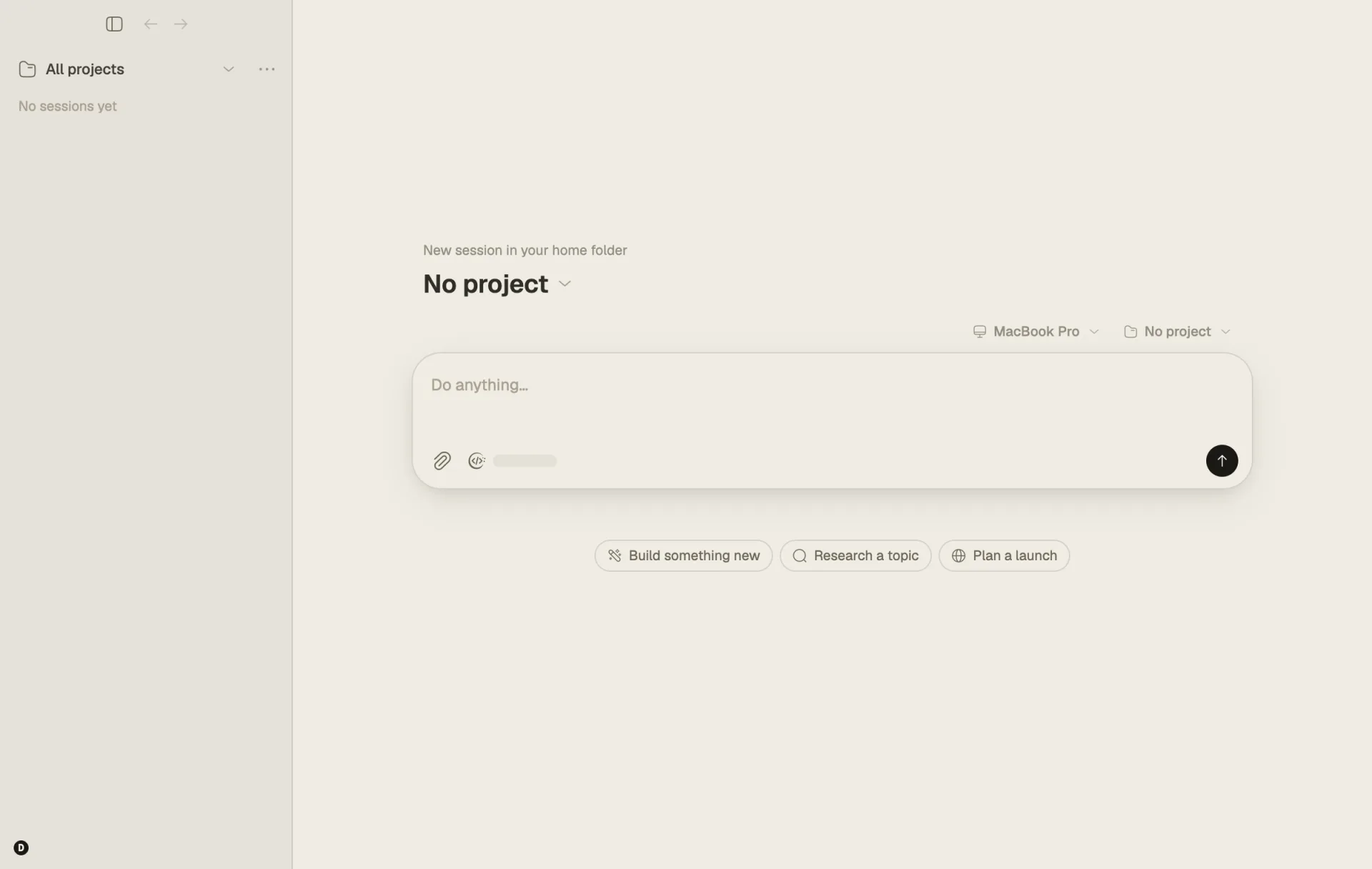
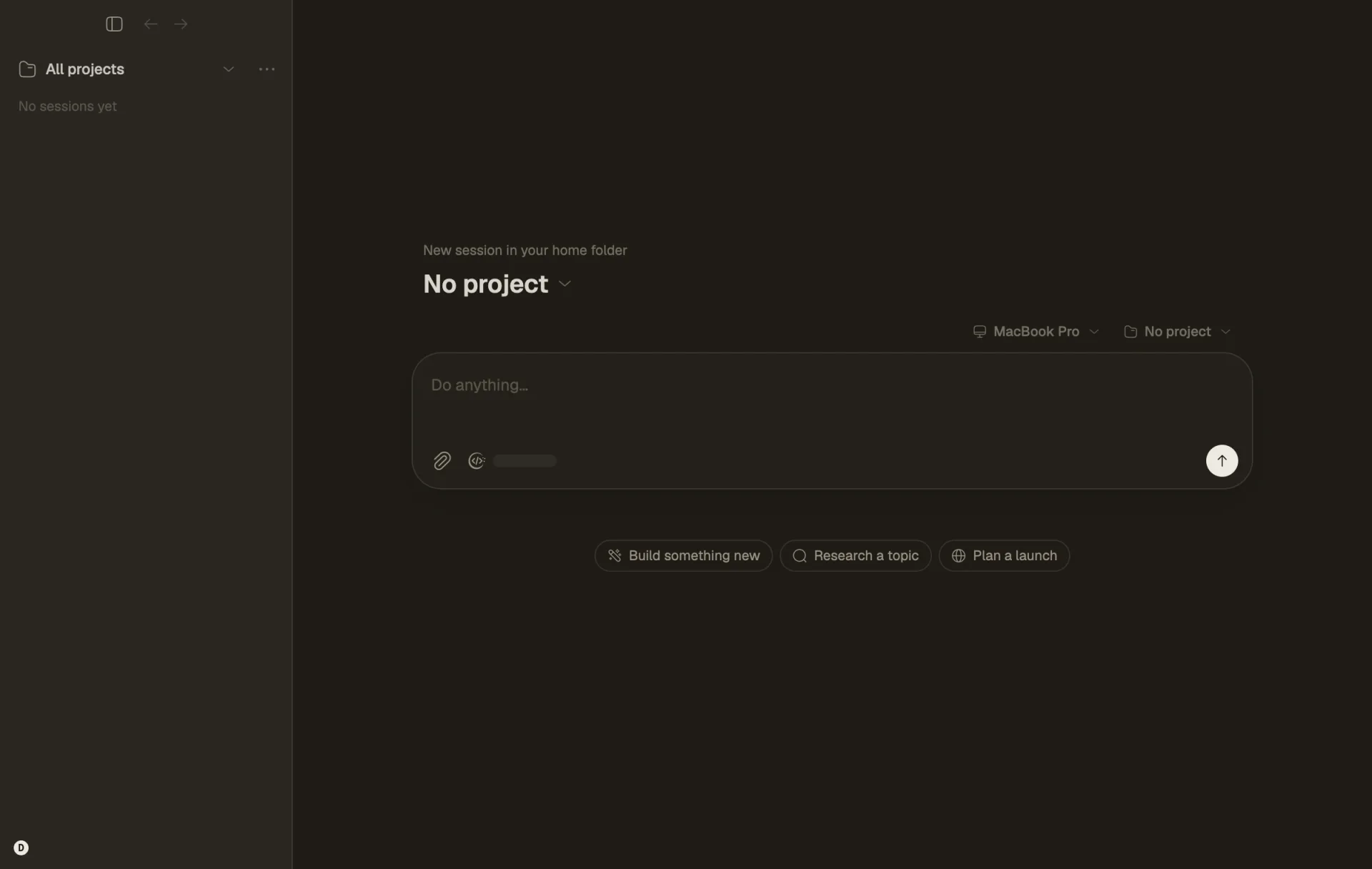
Use your Codex, Kimi or Grok subscription, or another supported provider. Compare connections · Run your first repository task · Verify the result
curl -fsSL https://github.com/justrach/codegraff/releases/latest/download/install.sh | shWindows · PowerShell, no WSL needed
irm https://codegraff.com/install.ps1 | iexHow it saves
Most of what a coding agent spends goes on what the model reads. Graff keeps that small.
A long log or test run is saved to a file. The model gets a short preview and reads only the lines it needs, instead of carrying the whole thing turn after turn.
Code search returns the matching symbols and lines, not whole files, so the model reads what answers the question.
As a conversation grows, older turns are summarized, so a long session doesn't resend everything on every request.
Pick the agent you use today, then set your team's numbers.
Measured on 21 tasks × 3 runs, every run passed, same model on both (one gateway model). Our tasks are not yours: treat this as a ratio, not a promise.
Money saved plus time saved: +$6,967 / month.
Graff, Claude Code, Codex, Cursor, Devin, Grok, Hermes, Pi, OpenCode and Antigravity. Pick the agent and model for each conversation.
Review what the agent changed beside the chat, with files, a browser and a terminal close at hand.
Build, research or plan a launch from a starter. Add one line and the agent takes it from there.
Follow and steer a session from your other computers or your iPhone while it keeps running at home.
Harness starts without an account. Nothing leaves your machine for sync until you turn it on.
Graff and Harness cost nothing. You pay your model provider, use a plan you already have, or use credits.
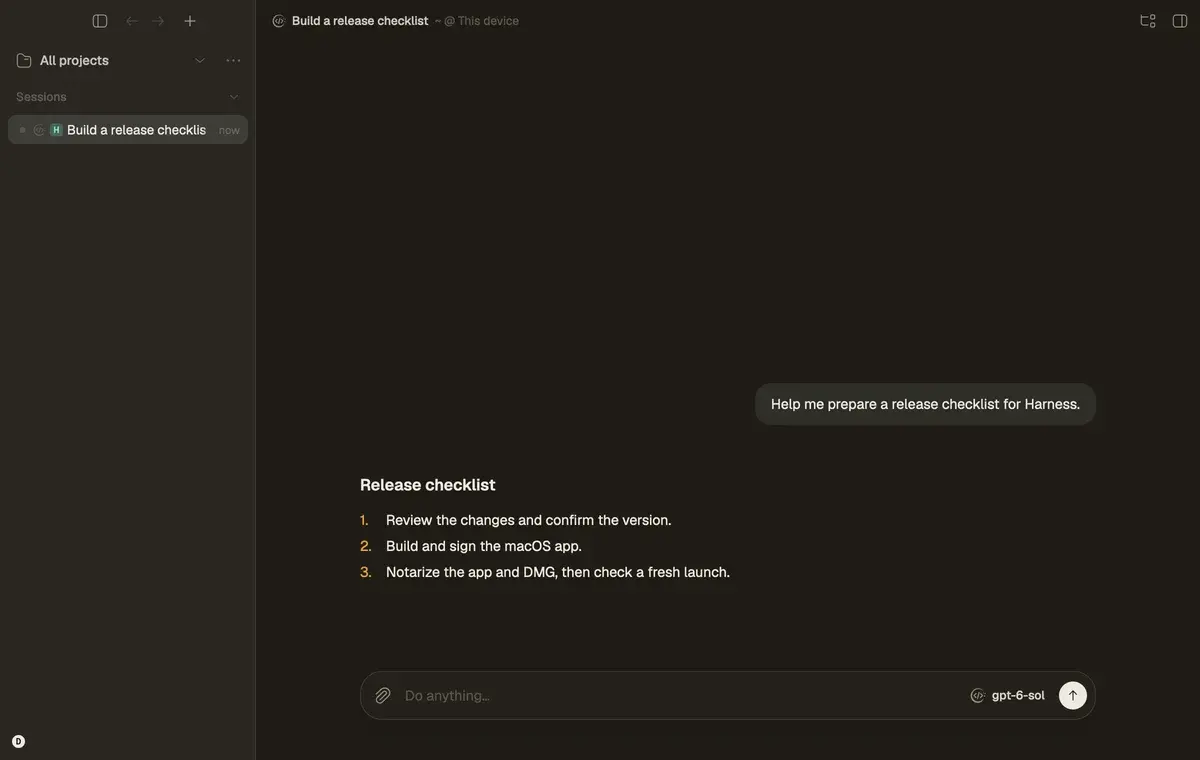
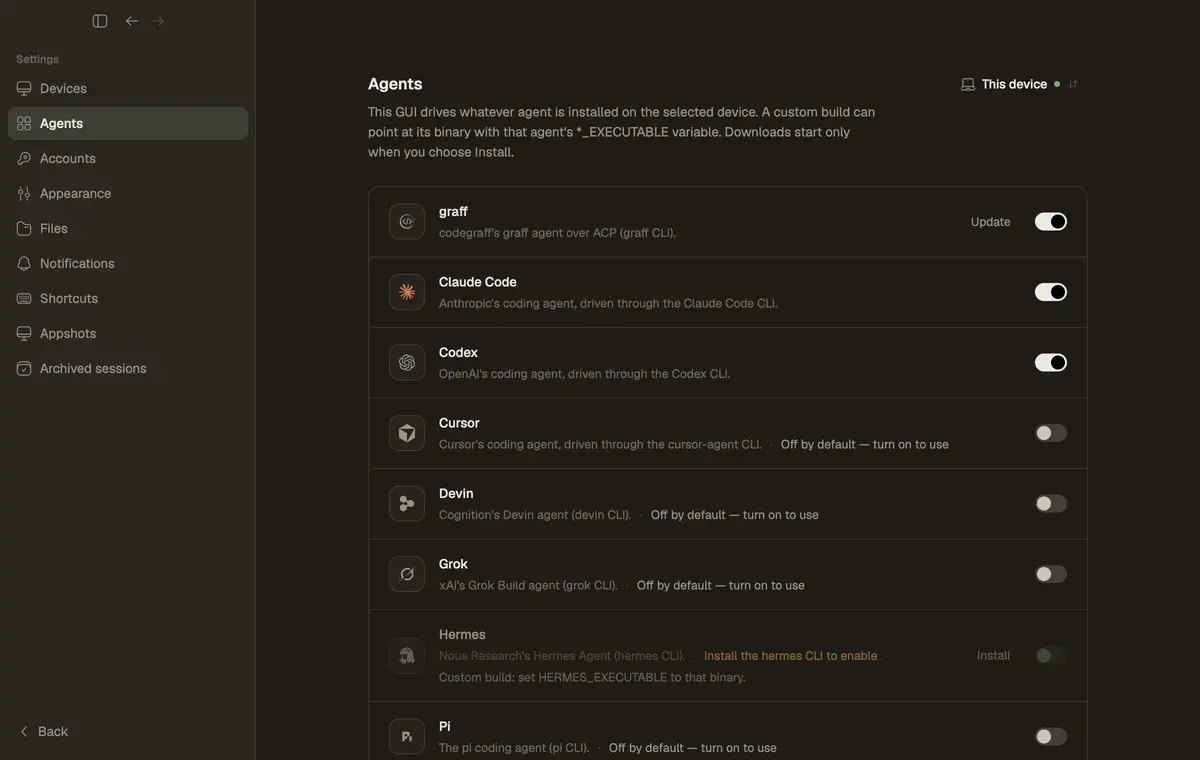
Pricing
No credits needed
Sign in with ChatGPT, Grok, Kimi Code or Z.AI and Graff runs on that plan, with its limits. Or connect your own provider key.
Connect a plan or key →Pay as you go
Prepaid credits for every model in the catalog, behind one account. You pay for what each request uses.
Buy credits →Lower-cost models only
A new account or a gift comes with free credit. It pays for a set of lower-cost models, sandboxes and storage, not every model. Buy credits to use any model.
Credit terms →See your balance in Harness under Settings → Usage and limits. When only free credit is left, a model it can't pay for is refused with a message that names the ones it can.
It keeps the model's context small. A long log or test run is saved to a file and the model reads only the lines it needs. Code search returns the matching symbols instead of whole files. Long conversations are summarized as they grow. On the same 21 tasks, Graff used 2.2× fewer tokens than Claude Code on coding tasks and 4.1× fewer on tool-heavy ones.
Free credit, the kind a new account or a gift comes with, pays for a set of lower-cost models, sandboxes and storage. Credits you buy pay for every model. When only free credit is left, a request for another model is refused with a message that names the models it can pay for.
No. Sign in with a ChatGPT, Grok, Kimi Code or Z.AI plan and Graff runs on that plan, with its limits. You can also connect your own provider key. Credits are for using many models behind one account, paid as you go.
In Harness, open Settings → Usage and limits. On the web, sign in to your dashboard.
Yes. Graff and Harness are free and open source. You pay your model provider directly, use a plan you already have, or use Codegraff credits.
Harness is the desktop app for macOS and Windows with Graff built in. It also runs Claude Code, Codex, Cursor, Grok, Hermes, Pi and other installed agents in one window. It starts without an account, and nothing leaves your machine for sync until you turn it on.
Your next task starts here
Download Harness, connect a model, and give Graff a task. Follow the changes and check the result for yourself.
More about Harness →